Right now, while you're reading this, a lead just filled out a form.
Two other agents are going to text them within the next ninety seconds.
The question isn't whether you'll follow up. It's whether your system will because yours might be asleep, at lunch, on another call, or simply not fast enough to matter.
Medicare automation software is the answer to that question. Not a luxury for big agencies. Not a someday-when-I-scale decision. The thing that decides, right now, whether that lead picks up your call or somebody else's first.
Medicare automation software handles the follow-up work agents can't do manually at scale: instant first-response texts, multi-step nurture sequences, appointment reminders, and renewal outreach, all triggered automatically based on lead behavior and pipeline stage. For Medicare agents, this isn't about replacing real conversations; it's about making sure no lead goes cold because a person was too busy to respond in time. This guide breaks down what medicare automation software actually automates, which sequences matter most, and what separates genuine medicare automation platforms from generic tools with a settings menu nobody finishes configuring.
Key Takeaways
- Speed-to-lead is the single biggest factor in Medicare sales, and automation is the only consistent way to win it.
- Medicare automation software sends the first text before a human could even pick up their phone.
- The agents closing the most aren't the fastest typers. They're running sequences that fire on their own.
- A connected platform puts follow-up on autopilot so deals don't die during a busy week.
- Medicare workflow automation turns a one-person hustle into a system that keeps working after hours.
Manual Follow-Up Has a Hidden Tax and It Compounds
Every time an agent manually texts a new lead, they're spending five minutes on something a system could do in five seconds. Multiply that across forty leads a week. Multiply that across a year.
That's not just time lost. That's response time lost, and in Medicare sales, the difference between a two-minute reply and a two-hour reply isn't a minor inefficiency. It's the difference between booking an appointment and leaving a voicemail for someone who already signed somewhere else.
Here's what manual follow-up is actually costing agents who haven't made the switch yet:
| What's Being Done Manually | What It's Actually Costing |
|---|---|
| Texting each new lead by hand | 5–6 minutes per lead, multiplied across every lead |
| Waiting until morning to reply to overnight forms | Cold leads before the day even starts |
| Remembering to send follow-up #2 and #3 | Warm leads written off as dead because nobody followed through |
| Sending appointment reminders one by one | No-shows that an automated text would have prevented |
| Manually reaching out at renewal time | Clients who switched three weeks before the agent called |
The cost is real, and it stacks. Medicare automation software doesn't just save time; it stops leads from expiring before a human ever gets to them.
What Medicare Automation Software Actually Does (Plain Language)
Forget the product pitch. Here's what actually happens when medicare automation software is running in the background:
A lead submits a form at 11:43 PM. The agent is asleep. The software isn't. A first text goes out within ninety seconds: name acknowledged, clear next step, warm tone. By the time the agent wakes up, the conversation has already started.
That lead doesn't respond to the first text. Three days later, a second message fires automatically. The agent didn't schedule it, didn't remember it, didn't think about it once. It just ran.
The lead responds and books a call. A calendar confirmation fires immediately. A reminder goes out the night before. A follow-up triggers if the appointment gets missed. Hands-free, start to finish.
The lead becomes a client. Ninety days later, a check-in sequence activates. Six months after that, birthday-month outreach fires. When AEP opens, a renewal message goes out. The relationship stays present because the system keeps it that way.
This is what medicare automation software looks like working. Not replacing agents, handling the mechanical work so agents are free for the conversations that actually close.
The Five Sequences Every Medicare Agent Should Have Running
1. Instant Lead Response
The first message a new lead receives under two minutes, every single time. No exceptions for weekends, evenings, or back-to-back calls. This is the single highest-impact sequence an agent can run. Get this one built first, and everything else stacks on top of it.
2. Multi-Touch Nurture
Not every lead responds to the first text. Or the second. A strong nurture sequence runs three to five touches over seven to fourteen days, mixing texts and emails without the agent manually scheduling any of it. Leads that look dead often aren't. They just need more than one attempt.
3. Appointment Confirmation and Reminder
Confirmation the moment a booking is made. A reminder the night before. A reminder the morning of. No-show rates drop fast when reminders run automatically. This is table-stakes medicare automation software that most agents still aren't running consistently.
4. Post-Sale Follow-Through
Week-one welcome. Month-three check-in. Birthday-month review. AEP outreach. These are the touches that keep clients from switching, and they're impossible to run manually across a full book without something dropping.
5. Cold Lead Re-Engagement
Leads that stop responding after one touch aren't always gone. A thirty, sixty, or ninety-day automated re-engagement sequence brings them back into the conversation at the right moment without anyone digging through old contacts.
A Real CRM With Medicare Automation vs. A Generic Tool With an Automation Tab
There's a version of this that sounds good in a demo and breaks down three weeks in.
Generic CRMs often have automation features technically. But building Medicare-specific sequences from scratch, connecting them to carrier workflows, and keeping every automated message HIPAA-compliant is not a weekend project. Most agents who try end up with a half-built system that creates more work than it removes.
A crm with medicare automation built for this industry comes pre-configured. MA, MAPD, and Supplement pipelines already in place. Follow-up sequences already designed around Medicare sales timelines. Compliance handled at the platform level, not left to each agent to figure out individually.
The gap between a crm with medicare automation purpose-built for insurance and a generic sales tool with automation settings is the difference between turning a key and wiring a car from the ground up.
What Medicare Workflow Automation Looks Like Across a Real Week
Monday morning: Seventeen leads from the weekend already have first-response texts in their inboxes. Six have replied before the agent's first coffee.
Tuesday: Three leads who didn't respond to day one get their second automated touch. One books an appointment through the scheduling link in the message.
Wednesday: A policy closes. The system immediately fires a welcome sequence and schedules a month-three check-in without the agent touching anything after hanging up.
Thursday: A lead from three weeks ago marked cold, essentially forgotten replies to the thirty-day re-engagement message. They're ready to talk.
Friday: AEP outreach goes to forty-one clients in the renewal window. The agent wrote zero of those messages today.
This is medicare workflow automation doing its job. The agent worked their pipeline; the system worked it too, in every gap where a person couldn't be.
The Bottom Line
Leads are going cold in your pipeline right now between texts you haven't sent yet. Some clients haven't heard from you long enough that AEP will feel like a fresh decision this year. Some appointments will no-show because nobody sent a reminder.
Medicare automation software doesn't fix all of this on day one, but it does address all of it without depending on a perfect week, a great memory, or a slow enough calendar to catch up. Every sequence that runs without you is a lead you didn't lose, a client you didn't forget, and a close that didn't require extra hours to chase.
The agents building the most productive books right now aren't working more hours than you. They invested early, built a system, and now the system works when they can't.
OmniReach: Medicare Automation Software That's Already Built for You
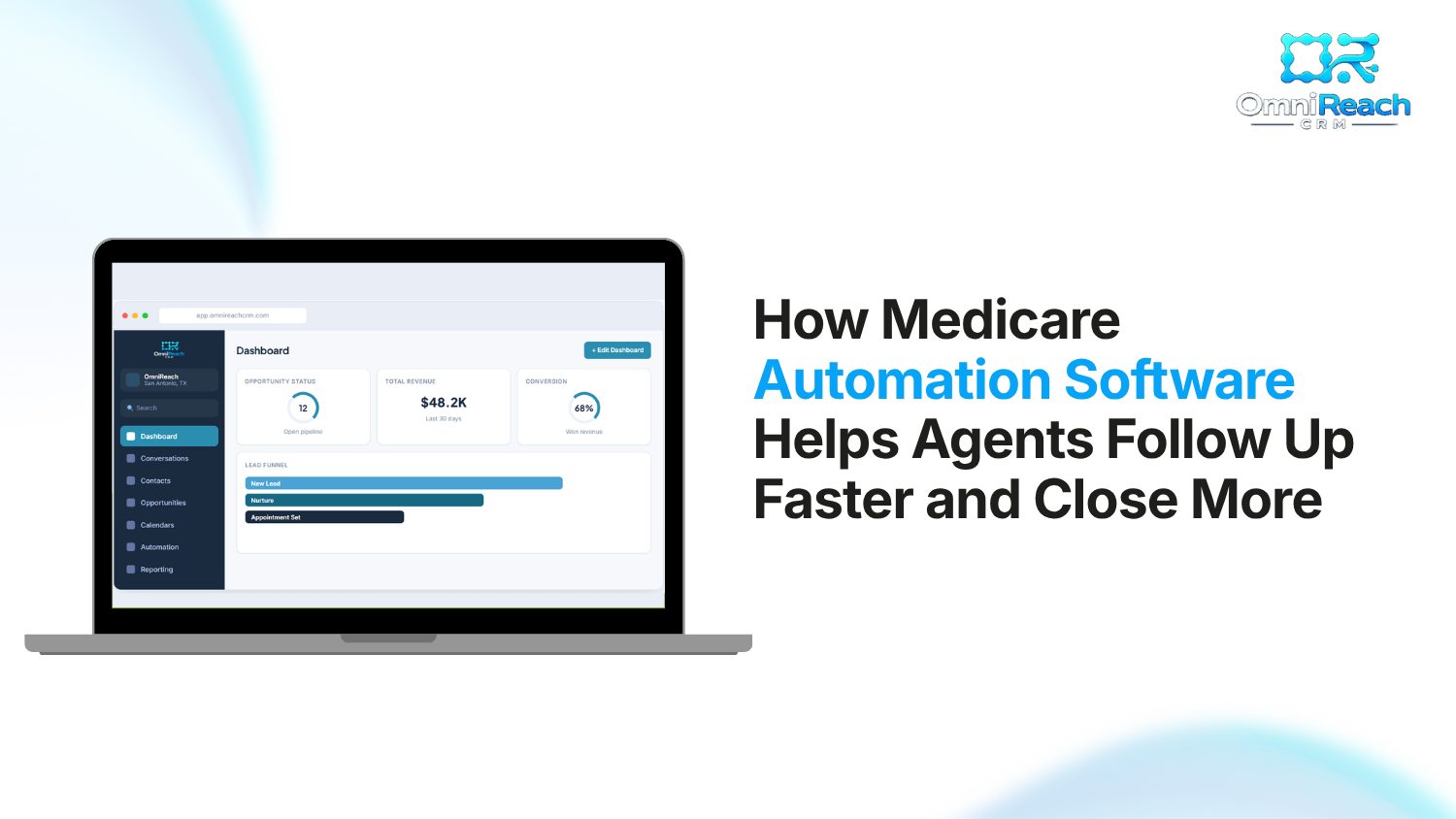
Setting up automation from scratch inside a generic CRM is a project that takes weeks. OmniReach is a platform where it's already done: pre-built Medicare pipelines, instant first-response sequences, multi-touch nurture, post-sale follow-through, and full HIPAA compliance across every automated message.
One login. Every follow-up running. No lead going cold because the week got busy.
The agents who stop doing this manually this month start winning leads they were losing every single week. Book a free demo with OmniReach and watch your entire follow-up system run live inside the platform before committing to anything.
Put Your Follow-Up on Autopilot
Pre-built Medicare pipelines, automatic follow-up, and HIPAA-compliant communication. Request a free demo today.
Book a Free Demo →FAQs
Does medicare automation software replace the personal side of selling Medicare?
Not at all. It handles the mechanical work first texts, reminders, check-ins so agents have more time for real conversations. Human moments get better when the surrounding noise is handled automatically.
How fast should the first automated response go out to a new lead?
Under two minutes is the standard. After ten minutes, response rates drop sharply. After an hour, a competing agent has often already booked the call. Speed is what the first message exists to win.
What makes a CRM with Medicare automation different from a general CRM with automation features?
A platform built specifically for this industry comes pre-configured with Medicare pipelines, compliant messaging, and sequences designed around how Medicare sales actually move. A general tool requires agents to build all of that themselves, which most never finish before the next busy week hits.
Which automation sequence moves the needle most for a newer Medicare agent?
Instant lead response, without question. Every other sequence compounds on top of it, but a slow first touch is the single most common reason warm leads stop responding.
Is medicare workflow automation hard to maintain once it's set up?
On the right platform, no. Most of the work is done at setup. Ongoing maintenance is seasonal: updating templates before AEP, adjusting sequences as your pipeline evolves. An afternoon twice a year, not a constant admin burden.